An FDA Filing for Momenta’s Adalimumab Biosimilar Coming Soon?

Momenta seems to be in final preparations for its first 351(k) filing to the Food and Drug Administration (FDA). In its recent investor conference, the company disclosed that it is ready to send M923, its adalimumab biosimilar, to the agency for approval.

Momenta's Adalimumab Biosimilar
Craig Wheeler, CEO of Momenta Pharmaceuticals

Despite this promising news, Momenta is facing strong headwinds. Even if it gains approval, Momenta expects that the US launch of the adalimumab biosimilar will not occur until 2023, owing to pending patent issues with Abbvie’s Humira®. The company does not yet have a marketing partner for this agent, though there appears to be plenty of time.

In addition, Momenta received a setback in November 2017 on another looming biosimilar candidate, when its biosimilar version of abatacept failed its phase 1 trial. Apparently, its M834 produced pharmacokinetic results that differed from the originator Orencia® in this early clinical study. Momenta is still studying the data and trying to come to grips with the surprising findings.

The company is also set to begin “pivotal” clinical trials on its other drug candidate M710, a biosimilar to aflibercept. The originator product is Eylea®, and it is indicated to treat wet age-related macular degeneration.

Momenta’s partnership with Mylan is moving forward with preclinical work on four other nonspecified biosimilars, according to the company. But all of this development costs money, and Momenta has acknowledged that it may need to raise cash for future development.

Momenta received approval in January for a generic form of the multiple sclerosis drug Copaxone® (glatiramer acetate). The approval of this agent, produced in partnership with Sandoz, had been delayed because of manufacturing issues. The company recognizes that the entry of Mylan (ironically) into this market may hinder its financial outlook.

As a result of these developments, Momenta stated it would entertain a sale of its adalimumab biosimilar “or other assets.”


The Patent Games: Another Sequel Underway

Roche/Genentech has filed suit in Delaware, citing the alleged violation of 37 patents by Amgen in its intent to market its biosimilar version of Herceptin®.  

The litigation was filed in response to Amgen’s stated intention of launching their product in October 2018, based on a May approval. Unfortunately, the Food and Drug Administration decided not to approve Amgen and Allergan’s initial 351(k) application in early June.

Roche has been engaged with Pfizer and the team of Celltrion and Teva on their trastuzumab biosimilars as well.

Fujifilm Gains Further Exposure in Biosimilar Partnerships

The biosimilar industry continues to make strange bedfellows. In July 2016, I reported in the Center for Biosimilars that a subsidiary of the Japanese camera maker, Fujifilm, had jumped into the biosimilar field. The Indian pharmaceutical company Biocon announced that it has launched its new insulin glargine biosimilar in Japan. Fujifilm Pharma Co, Ltd was named as the partner in this endeavor to commercialize the product in Japan.

Fujifilm Pharma is a producer of diagnostic and therapeutic radiopharmaceuticals, in addition to contrast media. This makes sense, as the parent is in the imaging business. Medical imaging can be a very natural extension of this activity. But biosimilars?

To reaffirm its strategy, Fujifilm announced a new partnership.  Its Fujifilm Kyowa Kirin Biologics subsidiary will manufacture a adalimumab biosimilar in the EU (filed for approval in the EU only) and will be commercialized by Mylan if approved. There is no information about whether Fujifilm will seek authorization to market this biosimilar in the US down the road.

Fujifilm Kyowa Kirin AstraZenecaTo further its chances of commercializing this biosimilar in the EU, Fujifilm Kyowa Kirin Biologics joined a lawsuit in April 2017 with Samsung Bioepis and its partner Biogen. The lawsuit, filed in the UK, sought to invalidate Abbvie’s two remaining adalimumab patents, and the UK court ruled in favor of the plaintiffs, opening the door to marketing next year in Europe. Fujifilm also has a bevacizumab biosimilar (FKB 238) in phase 3 clinical investigation.

The parent company has over 200 subsidiaries, and it can be complicated to track which ones are directly involved. For example, another Fujifilm company, Fujifilm Diosynth, does contract manufacturing of biologics. Yet, the phase 3 trial being carried out on FKB238 is sponsored by Centus Biotherapeutics Limited, which is a joint venture between Astra Zeneca and Fujifilm Kyowa Kirin Biologics. Centus seems to be involved only with the bevacizumab biosimilar, not with the adalimumab agent. Despite this web of intrigue, Fujifilm is not likely to be overexposed in the biosimilar marketplace. It is also unknown whether their efforts will be affected by the recent difficulties of its partners Biocon and Mylan with getting its pegfilgrastim biosimilar approved. It has been reported that Biocon will also benefit from this latest Mylan collaboration.

With the Samsung Bioepis Deal, Abbvie Tightening Its Grip on the US Adalimumab Market

Samsung Bioepis and Biogen has reached a deal with Abbvie that would enable it to market its biosimilar adalimumab (should it be granted approval) in June 2023. This is the second deal Abbvie has made with a potential competitor, confirming the solidity of its patent wall. The European patent expires in October 2018, and competitors will be able to sell biosimilars over the pond unhindered at that time.

However, without competition, most expect unencumbered price increases until a US biosimilar introduction. In other words, biosimilars will not make an appreciable impact on the cost of adalimumab in the US market, unless another biosimilar manufacturer decides to launch at risk in the near future.

A Deal Prior to FDA Approval

The agent, SB5 has not yet been filed for approval in the US. Samsung filed its application for approval in the EU in July 2016 and was authorized by the European Medical Agency in August 2017. Biogen will market the agent for Samsung, whenever it is launched.

Amgen inked a deal with Abbvie in September 2017, effectively ending its patent battle. This deal gives Amgen a jump on other competitors that reach settlements with Abbvie, by allowing a launch in January 2023. In addition, other manufacturers are working on adalimumab biosimilars, including Coherus and Sandoz. The biggest question though is Boehringer Ingelheim’s move, as they have the only other FDA-approved adalimumab biosimilar approved on the marketplace (but also unlaunched). Boehringer responded to our request but declined to comment on its plans mAbbvie produces Humira (adalimumab)oving forward with the product, including a targeted launch date.
Without Competition, Expect 45% Jump in WAC Price 

As addressed earlier in this space, the time to effective competition for a US biosimilar adalimumab is crucial. Abbvie’s annual global revenue on the product may reach as much as $21 billion, with the last price increase registered in January, at 9.7%. Assuming Abbvie sticks to its pledge of no more than one

10% price increase per year, that would result in a wholesale acquisition cost (WAC) of more than $52,000 at the close of 2022, or a 45% jump from today’s WAC. This figure does not reflect individual negotiated rates (including rebates) that health plans and insurers actually pay. Yet, it does roughly indicate what type of discount will be necessary when biosimilars reach the market to simply attain the cost paid in 2018—that is, no more savings. Without competition before 2023, this may be the one area where payers pray for a rapid and bracing race to the bottom on price once 2023 rolls around. With Abbvie’s hand continuing on the tiller, don’t plan on it.

In other biosimilar news…Celltrion acknowledged that it is seeking to rectify the manufacturing plant issues that torpedoed its FDA approval of biosimilars for trastuzumab and rituximab. In the statement, it noted, “Celltrion is confident that the issues raised by the FDA will be resolved in a timely manner.

We can confirm that the resubmission will be in-place relatively soon. Then, we are expecting approvals in 6 months after resubmission according to regulatory timeline.”

What Will Cost Savings on 2023 Adalimumab Biosimilars Really Be Worth?

AbbVie executives are sticking to their pledge to restrict annual price increases on Humira® below 10%, but even payer price protections won’t mitigate the increasing expenditures before adalimumab biosimilars hit the market. In 2023, when adalimumab biosimilars become available, the savings biosimilars represent may not be real savings at all.

Pharmaceutical companies generally seek to lock in preferred coverage status for their agents through the use of rebates, which lowers the net costs. Typical in these contracts is a price guarantee, which shields the payer from annual (or more frequent) price increases for the duration of the contract. The contract life is one or two years, after which the health plan, insurer, health system, or pharmacy benefits manager must renegotiate—that means significantly higher costs for each successive contract renewal.

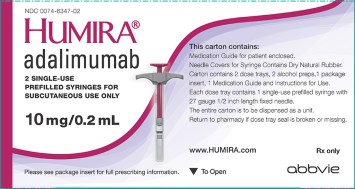
Humira adalimumab

Drug price increases for self-injectable medications like adalimumab, are reported on top of its wholesale acquisition cost (WAC), or the list price. Rebates are applied to WAC pricing. Therefore, if for example, a manufacturer announces 9% price increase to drug X, that applies to the WAC price and does not include consideration of rebates or price guarantees secured by a payer. Rebate information is notoriously difficult to obtain, as payers and pharmaceutical companies consider them proprietary.

However, in a January piece in the New York Times, the author cites research by SSR Health, which concludes that the price of Humira with rebates rose 100% since 2012 to an average of approximately $38,000. Assuming AbbVie executives hold to their price increase pledge, raising their prices by only 6% per year, by 2023 when patent expirations will bring a rash of biosimilars to market, Humira’s price after rebates would have risen 33.8%, to $50,844. If the price is jacked up 9% per year, that would be an increase of 53.9%, to $58,482. This is assuming of course that AbbVie does not increase the rebate at each contract negotiation to offset the higher net cost. To make this dystopian vision complete, let’s not forget that the full savings will not obtained over a population unless all utilization is fully converted to a biosimilar from Humira. That may require an interchangeable biosimilar product (which has not yet been approved) .

As we reported last year, the Institute for Cost-Effectiveness Research established that to meet accepted thresholds for cost-effectiveness, Humira would have to be discounted 55% from its list price. Rises in the cost-effectiveness thresholds (currently $100,000–150,000 per quality-adjusted life-year) would never keep up with this pace of price increases. By 2023, Humira will be even further off the mark in terms of providing value.

The most important point of this, is that the cost savings of the biosimilars that are finally introduced could be an illusion. If a price war in 2023 for newly available adalimumab biosimilars results in 50% discounts, we may have received little but a roll back in costs to those of today. From the perspective of 2018, that’s not savings. That is price stability.

I wrote in 2016 of the same effect for Enbrel®. Because Amgen had taken multiple price increases in the previous years, the WAC cost jumped 37%. And in 2018, no biosimilar is presently marketed for prescription in the United States. The relative discount by Sandoz (presently the sole US company with an approved biosimilar etanercept) needed to actually save payers money for etanercept will not be realistic.

Sandoz Files 351(k) Application for Adalimumab Biosimilar

Sandoz announced that it has thrown its hat in the ring for another Humira biosimilar. Sandoz filed an European application for approval for GP2017 last year, in the expectation that it will be able to launch soon after the European patent expires in October 2018.

This will be the third application for an adalimumab biosimilar. Versions by Amgen (Amjevita) and Boehringer Ingelheim (Cyltezo) have been approved by the Food and Drug Administration (FDA); however, patent litigation has held up marketing. Amgen had signed an agreement with Humira’s manufacturer Abbvie to postpone marketing until 2023. Boehringer Ingelheim has not signed a similar agreement, but no indication is yet given regarding the US launch of this product.

It is assumed that European revenues will sustain the biosimilar manufacturers until US marketing begins. This is Sandoz’s fifth FDA biosimilar application. It has received approval for Zarxio (filgrastim) and Erelzi (etanercept); its application for rituximab is under review, and it received a rejection for its version of pegfilgrastim.

Sandoz’s Pegfilgrastim Biosimilar Under New Review at EMA

On October 27, Sandoz announced that the European Medicines Agency has accepted its re-application for review of its biosimilar version of Neulasta® as supportive treatment in patients receiving cytotoxic chemotherapy.

PrintSandoz’s attempt to bring its biosimilar pegfilgrastim to the market was stalled in the US in Q2 2016, when the FDA issued a complete response letter. It had withdrawn its application to the European Medicines Agency in January 2017. However, the new application seems to be bolstered by additional data, according to reports.

Sandoz is expecting to reapply to the FDA in 2019, according to its website.

As noted too often in this space, the journey to approval for a pegfilgrastim biosimilar has been marked by failure and setbacks. However, as shown in the Figure from the MarketRealist, revenues for Neulasta are considerably larger than that for its nonpegylated progenitor, Neulasta (filgrastim). This is a powerful impetus for potential biosimilar manufacturers to succeed. At close to $5 billion in annual revenues, there is little reason to think that a biosimilar pegfilgrastim will not be approved eventually.

Market Realist.png

Source: The Market Realist.

In other news… AbbVie expects its Humira sales to jump to $21 billion by 2020 from $16 billion today, evidently bolstered by its successful defense of its patents against Amgen.

Are We Now Thinking “Authorized Biosimilars”?

Authorized generics have been around for a couple of decades. They can be a challenge to payers, health systems, and patients who are seeking the price-reduction benefits borne out of normal competition. The Amgen–Abbvie agreementHerceptin on the biosimilar for Humira® seems to be right out of this playbook.

In summary, authorized generics work like this:

  • A brand manufacturer has a product that is nearing patent expiration
  • Rather than ceding its marketshare altogether in the face of multisource products, the manufacturer will come to an agreement with a generic drug maker to produce the first generic of its product, which allows the branded company to earn licensing fees and royalties on the drug
  • The additional royalty or licensing fee means that the price of the authorized generic will likely be higher than if there was no agreement
  • The maker of the authorized generic will get to market sooner (perhaps even prior to patent expiration)
  • Competing generic manufacturers will have to edge their way into the market against not only the authorized generic maker but perhaps the branded manufacturer that is benefiting from the agreement

On September 28, Amgen and Abbvie announced an end to the patent litigation between the companies. The agreement will allow Amgen to market its biosimilar (Amjevita™) in the US (in 2023) and in the EU (in 2019). The dates reflect differences in principal patent expirations for the two major markets. The all-important composition-of-matter patent expired in December 2016, which is why potential biosimilar manufacturers had hopes of marketing their products as early as 2017 in the US. The other patents don’t expire until 2023.

Under the agreement, Amgen acknowledges the validity of Abbvie’s myriad non–composition of matter patents on Humira and gives up the litigation fight to market its version of adalimumab. Amgen will pay Abbvie a licensing fee to market the product, similar to the type of deal for an authorized generic.

Presumably, Amgen entered into the agreement and did not launch at risk, because it feared that Abbvie would be able to successfully defend its patent maze in court. The agreement would allow Amgen to launch in the European market, which would sustain it during the wait to launch in the US.

However, Amgen is not the only potential maker of an adalimumab biosimilar. Boehringer Ingelheim has an approved product (Cyltezo™), which was approved in January 2017. Several other players are in later-stage trials, including (at least) Coherus Biosciences, Momenta Pharmaceuticals, Pfizer, Samsung Bioepis, and Sandoz. It is too early to tell what this agreement might mean for them. Might Abbvie be willing to make separate agreements with them as well, thereby ensuring itself of a cut of these profits for years to come?

In the biosimilar space, there is no exclusivity for the first biosimilar to market, and if a drug maker sought to launch at risk, the rewards can actually outweigh the potential penalties if they found themselves on the wrong end of ongoing patent litigation. Pfizer took the gamble with its Inflectra® biosimilar of infliximab.

If they have to wait until 2023 for this biosimilar, payers may decide to take action. One way would be to encourage the use of other anti-TNF inhibitors or even other effective biologic classes over Humira, if their pricing made sense. However, Humira is often preferred and significant rebates would be at stake.

Legislators did not account for the possibility of authorized biosimilars. It could be a further obstacle to making biologics more accessible to the people who may most benefit from their use.

The Week in Biosimilar News

You know it’s been a pretty desperate week in the biosimilar blogosphere when twitter feeds relate back to articles published in January, rehashes of the US Supreme Court decision in June, or yet another estimate of the savings potentially ascribed to biosimilar use (based on erroneous assumptions). However, there were a few significant tidbits announced last week that are worth reviewing.

First, Biocon announced that the decision to approve its trastuzumab biosimilar (with partner Mylan) has been delayed by the Food and Drug Administration (FDA) 3 months (until December 3, 2017). According to Biocon, this delay was required so that the FDA could “review some of the clarificatory information submitted as part of the application review process.” Clarificatory? Really? Maybe the extra time was needed to translate the application itself.

Second, a survey of 103 US gastroenterologists raised a couple of questions as to how well information about Inflectra®, the biosimilar to Remicade®, is sinking in on the practice level. According to a press release from Spherix Global Insights, cross-category prescribing may be interfering with the uptake of the biosimilar. They state, “not only is the decline [in Remicade prescriptions] attributed to the adoption of infliximab biosimilars, but use of Humira® has also significantly increased, potentially indicating that more ulcerative colitis patients are being placed on Humira to avoid insurance mandates for infliximab biosimilar use.” This limited survey found that more than one-third of gastroenterologists “agree that if a pharmacy or managed care plan advises them to use Inflectra over Remicade, that they are more likely to choose a different TNF-inhibitor altogether.” This is a weird finding, perhaps indicating nothing more than spite for the health plan’s benefit design. Clearly, if the physicians fully considered the evidence, they would be less likely to prescribe in this way. Admittedly, as notable numbers of managed care organizations have not actually mandated Inflectra use at this point in time, we would have to wait to see if this opinion is validated in actual practice.

Finally, Sanofi announced that it had received tentative approval on a follow-on biologic form of insulin lispro (the originator product was Lilly’s Humalog®). Patent issues will have to be resolved before Sanofi can receive final approval and bring this product to the market. The insulin biosimilars are not regulated under the Biologics Price Competition and Innovation Act, but rather under the Hatch–Waxman Act—the application was filed as a 505(b)2 rather than a 351(k) variety. They are transitional products, which will considered under the newer regulations after March 23, 2020. We will detail these lesser-known transitional drug categories in a future post.

FDA Approves New Humira Biosimilar, Bypasses Advisory Board Route

Boehringer Ingelheim Pharmaceuticals, Inc. announced August 29 that it had received approval from the Food and Drug Administration (FDA) for its first biosimilar. Named Cyltezo™ (adalimumab-adbm), a biosimilar to Humira®, it is approved for several autoimmune disorders, including rheumatoid arthritis, polyarticular juvenile idiopathic arthritis, psoriatic arthritis, ankylosing spondylitis, Crohn’s disease in adults, plaque psoriasis, and ulcerative colitis.

The FDA approval bypassed the need for an Arthritis Advisory Committee review and recommendation, which the agency suggested may be increasingly common with future biosimilar approvals. One suspects that this is more likely with the licensing of the first biosimilar for a particular originator product, with the assumption of a comprehensive data package on submission.

Like Amgen’s Amjevita®, Boehringer’s biosimilar will likely enter a holding pattern until patent litigation is settled (or the patents expire) on AbbVie’s Humira. In the meantime, Boehringer indicated that it will seek approval for an autoinjector, to stand alongside its newly approved subcutaneous formulation.

Boehringer has also applied for approval with the European Medicines Agency, which is expected to decide on its approval before the end of this year. Samsung Bioepsis and partner Biogen earned its own European approval for Imraldi™ this week, another adalimumab biosimilar.

Budgeting the Impact of Inflectra and a Possible Clinical Benefit for Amjevita

Although the biosimilar marketplace is fairly stagnant at the moment, there was plenty of action at this week’s annual meeting of the Academy of Managed Care Pharmacy held in Denver, March 27–30.

Calculating the Breakeven Point for a Health System

A poster presentation from the University of Pittsburgh School of Pharmacy discussed the budget impact of adding biosimilar infliximab (Inflectra®) to the formulary of a model health system.

In this presentation, the researchers assumed the health system had 1,000 patients taking infliximab; of these, 400 were new prescription starts for the biosimilar’s rheumatology and gastroenterological indications, and the rest were receiving maintenance therapy on the originator product Remicade®. The model assumed 3 levels of discounting on Remicade: 10%, 15%, and 20%. They assumed that 60% of patients with a gastrointestinal indication would start on Remicade, and 40% of new start patients would be given Inflectra. At a new start and maintenance price of $20,430 for the biosimilar, they calculate a breakeven point of 15% discount for Remicade to keep only the originator on formulary.

If they assumed that the biosimilar was given not only to new starts but also to 50% of patients initially receiving Remicade , the breakeven discounting point for keeping Remicade only on the formulary becomes far greater. This model is somewhat conservative, because it assumes no further discounting by Pfizer for its biosimilar product. However, it also does not consider additional levels of rebating by Janssen Biotech.

A Biosimilar’s Noneconomic Benefit?

Although biosimilar manufacturers are constrained in the respect that their product has to not only mirror the structure and clinical effect of the originator biologic, it also cannot be produced in a more convenient form of administration (autoinjector vs. vial/syringe). The expectation is that the biosimilar will not be superior in any way to the originator. In a second poster presentation, Amgen researchers disputed this assertion with their biosimilar version of adalimumab. According to their findings, Amjevita® was associated with less injection-site pain compared with Humira®, based on pain scores given by clinical trial patients with moderate to severe rheumatoid arthritis. They found that pain site scores (based on a 100-mm visual analogue scale) were significantly lower at each 4-week office visit for the biosimilar.

The researchers theorize that the reason for the benefit may be the different excipients used in the biosimilar versus the originator drug.