Preparations Being Made for Much-Delayed Introduction of Enbrel Biosimilars

Samsung Bioepis and Teva announced a deal in which Teva will commercialize Samsung’s etanercept biosimilar Eticovo; launch date should be in 2028.

Samsung Bioepis’ deepening ties with Teva has yielded a new deal for its etanercept biosimilar Eticovo. Under the new agreement, Teva will obtain US commercialization rights to Eticovo. The timing of Eticovo’s commercial launch in the US will be determined by Teva, according to the press release.

The Long Delay to Etanercept Biosimilar Launch Nearing the End

Even though two etanercept biosimilars were approved by the FDA in 2016 and 2019, respectively, judicial interpretations of the reference product’s patent expirations have kept the biosimilars off the US market for more than a decade relative to its EU launch. Without the ability to commercialize the biosimilar until at least 2028, other biosimilar manufacturers have avoided further development. At an annual net sales revenue of around $3 billion, Enbrel’s manufacturer (Amgen) has reaped at least $30 billion in additional sales since the first etanercept biosimilar approval.

etanercept biosimilars

Sandoz has not yet disclosed commercialization plans for its etanercept biosimilar Erlezi, but it has been very active on both the manufacturing phase and as a marketing partner. As there still only two etanercept biosimilars approved in the US, there may still be significant sales opportunities for these products.

As part of the new agreement, Teva will also obtain US commercialization rights to Samsung Bioepis’ infliximab biosimilar Renflexis in the third quarter of 2027. Organon and its predecessor Merck had possessed the rights to this biosimilar product since its launch in 2017.

According to the agreement, “Teva will pay Samsung Bioepis an upfront payment over the next 3 years. Samsung Bioepis may be eligible for additional launch and sales milestones payments. Teva and Samsung Bioepis will share profit from the commercialization of these products.”

This article was written by our Director of Content, Stanton Mehr. Stan has been writing commentary and reporting news about the biosimilar industry since the submission of the first biosimilar 351(k) application to the FDA 13 years ago. Since that time, BR&R has been tracking the US biosimilar marketplace, with the industry’s original, comprehensive and updated database of biosimilar filings with the FDA. 
Second Etanercept Biosimilar Receives FDA Approval

Samsung Bioepis scored another biosimilar approval in the US, as the Food and Drug Administration gave its nod to etanercept-ykro on April 25, 2019. Formerly known as SB4, Samsung Bioepis dubbed this agent Eticovo™. It is the second
Enbrel® biosimilar to to receive US approval.
 
This approval covered all of the reference product’s autoimmune indications, including ankylosing spondylitis, polyarticular juvenile idiopathic arthritis, psoriatic arthritis, plaque psoriasis, and rheumatoid arthritis. Clinical studies were performed in patients with moderate-to-severe rheumatoid arthritis, finding that in combination with methotrexate, Eticovo achieved ACR20 scores that were equivalent to that of Enbrel by week 24 (78.1% vs. 80.3%, respectively). Safety and immunogenicity were also comparable with those of the reference agent.

Eticovo has been approved in the EU and Canada, in addition to other parts of the world, under the brand names Benepali and Brenzys. Samsung Bioepis has not announced a launch date in the US for its biosimilar, and this can be delayed for quite some time. Sandoz’s Erelzi® was approved in 2016, but has not yet reached the market because of patent litigation. Amgen, which manufacturers Enbrel, believes its patents extend effectively into 2028, which would provide for nearly 30 years of product exclusivity.


Both Coherus and Lupin have investigational etanercept biosimilars that are in phase 3 trials. Neither has publicly filed for FDA approval to date.

What Will Cost Savings on 2023 Adalimumab Biosimilars Really Be Worth?

AbbVie executives are sticking to their pledge to restrict annual price increases on Humira® below 10%, but even payer price protections won’t mitigate the increasing expenditures before adalimumab biosimilars hit the market. In 2023, when adalimumab biosimilars become available, the savings biosimilars represent may not be real savings at all.

Pharmaceutical companies generally seek to lock in preferred coverage status for their agents through the use of rebates, which lowers the net costs. Typical in these contracts is a price guarantee, which shields the payer from annual (or more frequent) price increases for the duration of the contract. The contract life is one or two years, after which the health plan, insurer, health system, or pharmacy benefits manager must renegotiate—that means significantly higher costs for each successive contract renewal.

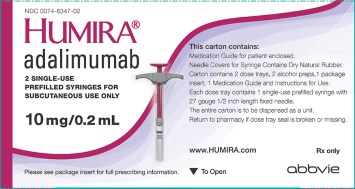
Humira adalimumab

Drug price increases for self-injectable medications like adalimumab, are reported on top of its wholesale acquisition cost (WAC), or the list price. Rebates are applied to WAC pricing. Therefore, if for example, a manufacturer announces 9% price increase to drug X, that applies to the WAC price and does not include consideration of rebates or price guarantees secured by a payer. Rebate information is notoriously difficult to obtain, as payers and pharmaceutical companies consider them proprietary.

However, in a January piece in the New York Times, the author cites research by SSR Health, which concludes that the price of Humira with rebates rose 100% since 2012 to an average of approximately $38,000. Assuming AbbVie executives hold to their price increase pledge, raising their prices by only 6% per year, by 2023 when patent expirations will bring a rash of biosimilars to market, Humira’s price after rebates would have risen 33.8%, to $50,844. If the price is jacked up 9% per year, that would be an increase of 53.9%, to $58,482. This is assuming of course that AbbVie does not increase the rebate at each contract negotiation to offset the higher net cost. To make this dystopian vision complete, let’s not forget that the full savings will not obtained over a population unless all utilization is fully converted to a biosimilar from Humira. That may require an interchangeable biosimilar product (which has not yet been approved) .

As we reported last year, the Institute for Cost-Effectiveness Research established that to meet accepted thresholds for cost-effectiveness, Humira would have to be discounted 55% from its list price. Rises in the cost-effectiveness thresholds (currently $100,000–150,000 per quality-adjusted life-year) would never keep up with this pace of price increases. By 2023, Humira will be even further off the mark in terms of providing value.

The most important point of this, is that the cost savings of the biosimilars that are finally introduced could be an illusion. If a price war in 2023 for newly available adalimumab biosimilars results in 50% discounts, we may have received little but a roll back in costs to those of today. From the perspective of 2018, that’s not savings. That is price stability.

I wrote in 2016 of the same effect for Enbrel®. Because Amgen had taken multiple price increases in the previous years, the WAC cost jumped 37%. And in 2018, no biosimilar is presently marketed for prescription in the United States. The relative discount by Sandoz (presently the sole US company with an approved biosimilar etanercept) needed to actually save payers money for etanercept will not be realistic.

Frustration Mounts as Sandoz’s Etanercept Biosimilar Launch Delayed into 2018

Call it irritation, exasperation, or frustration, but biosimilar manufacturers and payers alike are feeling it, as the fight over drug patents has barred the way to approval for yet another biosimilar for a costly biologic.

In this case, Sandoz’s Erelzi™, which was approved by the Food and Drug Administration on August 30, 2016, has been caught in the patent litigation web. The originator drug, Amgen’s Enbrel® was first approved in 1998. Amgen asserts that its patent on the agent protects exclusivity until 2029, which would give Amgen 31 years of sole marketing rights. Despite the unlikely event that it can defend its patent for this extraordinary period, Sandoz has acknowledged that it will need to hold off launch of the biosimilar until at least 2018.

In a report from Reuters on January 25, Richard Francis, CEO of Sandoz, stated that the legal battle “won’t really reach a conclusion until 2018. That’s the frustration sometimes of the legal situation, but the way I look at that, we’re carving the landscape out as we go.”

Indeed, Sandoz has been at launch-delaythe forefront of legal battles, also fighting Amgen on the validity of the 180-day notification period, which is now being readied for US Supreme Court arguments in the Spring. The 180-day notification period for Erelzi was due to end in
late February 2017. After this time, Sandoz may still launch the product, at risk of financial penalties and loss of revenues, if the courts rule that Amgen’s remaining patent is valid.

However, the potential for savings on Enbrel, through biosimilar competition, continues to be a mirage for payers. The agent, which pulled in US revenues of $5 billion in 2015, has been the subject of numerous recent price increases. Health plans and insurers, while believing these costs untenable, may have little choice but to pay up or find ways to more aggressively restrict access.