Interchangeability Is Finally a Reality

In a long-awaited first, the Food and Drug Administration has approved Viatris’ biosimilar insulin candidate Semglee® as interchangeable, meaning it can be substituted automatically at the pharmacy if the prescription is written for the reference product Lantus®. As allowed by individual state laws, substitution does not require the pharmacy to notify a prescriber.

This marks the first interchangeable biosimilar approval of any type in the US. The nonproprietary name given for Semglee is insulin glargine-yfgn. It is approved for use for any approved glargine indication.

In the FDA’s press release announcing the approval, Acting Commissioner Janet Woodcock, MD, stated, “This is a momentous day for people who rely daily on insulin for treatment of diabetes, as biosimilar and interchangeable biosimilar products have the potential to greatly reduce health care costs. Today’s approval of the first interchangeable biosimilar product furthers FDA’s longstanding commitment to support a competitive marketplace for biological products and ultimately empowers patients by helping to increase access to safe, effective and high-quality medications at potentially lower cost.”

The FDA specifies that an approved interchangeable biosimilar can be expected to produce the same clinical result as the reference biologic in any given patient. The patient should not experience any addition risk in terms of safety or lower efficacy than if the patient continued to receive the reference product.

Something that may get lost in this momentous announcement is that the approval of Semglee also marks the first approval of a biosimilar insulin in the US. This is a bit of a misnomer, however. Earlier copies of insulin glargine (e.g., Basaglar®) were approved under the 505(b)2 pathway before the March 2020 transition to 351(k) approval. Like Basaglar, Semglee was originally approved (in June 2020) under the 505(b)2 pathway and launched in the US in August 2020. However, Viatris (then Mylan) decided to file for biosimilar status, likely in the hope of securing the interchangeability designation. At the time of last year’s launch, partners Biocon and Mylan indicated that it would discount the price of Semglee by 65% (a wholesale acquisition cost of $147.98 per package of five pens holding 3 mL each) compared with the 2020 price of Lantus.

Viatris is also working on a biosimilar of insulin aspart. The 351(k) application for this product is expected to be submitted before the end of the year.

The next FDA decision on interchangeability is likely that for Boehringer Ingelheim’s adalimumab biosimilar Cyltezo®.

The value of interchangeability, both to payers and to manufacturers, is not yet known. It should provide some leverage for plans who want to quickly shift marketshare from a reference product, allowing them to maximize anticipated cost savings. Yet, the insulin glargine space already has several brand-name competitors; it will be interesting to see whether the new interchangeable entering the market moves the needle on insulin glargine pricing or biosimilar uptake. Since Semglee was already available and the list price heavily discounted, this may tamp down the reaction by payers.

From the perspective of the adalimumab marketplace, the value of interchangeability seems cloudier, because of the sequential launch of biosimilars entering settlements with AbbVie, and the presence of two biosimilars who may decide to launch even earlier.

In any case, this has been a very long slog to reach this first. Enough speculating. Let’s see what really happens.
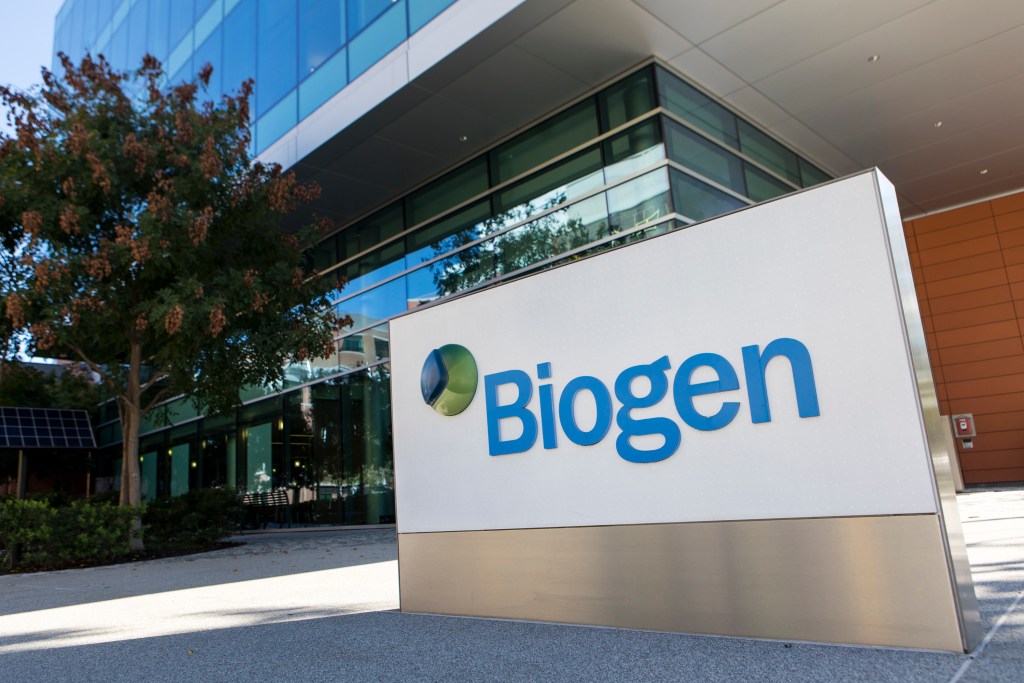
The FDA’s Aducanumab Affair and How It Relates to Biosimilars

The baffling early June decision by the Food and Drug Administration (FDA) to approve Biogen’s Alzheimer’s disease drug and ignore the recommendation of its Advisory Committee has been covered and chronicled to the level of the COVID-19 pandemic. On another platform, I put in my two cents on how payers may step in to save the FDA from itself.

In this post, I want to weigh in on two aspects of this lamentable episode that affects the biosimilar sector. First is the obvious: An erosion of confidence in the FDA’s ability and incentives in carrying out its mission—ensuring that drugs approved for use in the US are safe and effective. Based on the available evidence, arguments can be made that the risks of aducanumab well outweigh the potential benefits. That is what the FDA’s own staff reviewers thought when giving their assessment for the drug evaluation.

Another unassailable argument can be made for the risk for rewards for Biogen. The projected price point ($56,000) and the potential number of patients for whom it can be prescribed under the broad indication originally approved (though the FDA has backtracked and tried to narrow the indication) could set Biogen up for multibillion product sales for at least 12 years into the future. Now word has come out that FDA has had subsequent discussions with Biogen that seemed to affect the FDA’s final decision. Now, those optics are about as bad as it gets—for the FDA and for Biogen. Acting FDA Commissioner Janet Woodcock has ordered an investigation by the Health and Human Services Inspector General into the process—the result of excellent journalism uncovering these secretive talks by STAT. If I were a provider, patient, or payer who was not yet convinced of the armada of proof of the safety and efficacy of biosimilars, this is a big deal. The FDA approves a product for which safety is an issue and for which its clinical effectiveness is seriously in doubt.

In the case of the FDA’s decision, Patrizia Cavazzoni, MD, went all in on the fact that aducanumab removes amyloid plaque from the brains of patients with mild disease. However, this has not yet been shown, in several clinical trials, to result in any clinical improvement or delayed progression of the Alzheimer’s disease process. In other words, she and her colleagues at FDA believe that removing amyloid plaque is a proxy for a positive outcome, which one day will be confirmed to be true.

Don’t forget that FDA made a similar bet on proxies for clinical outcomes in the biosimilar field: That the similarity in physiochemical structure of biosimilars would result in clinical outcomes that were equivalent to those produced by biosimilars. They’ve cashed in on that bet; it has been backed up with plentiful phase 3 clinical trial evidence and switching studies. Those proxies are particularly important in terms of extrapolated indications, for which there were no late-stage clinical studies.

The second piece to this is Biogen’s role as a player in the biosimilar market. Biogen is a major shareholder in Samsung Bioepis, and will be marketing the latter’s biosimilars like denosumab, ranibizumab, and others in the US. Biogen already markets several biosimilars in Europe, including a version of adalimumab. It is also working with Bio-Thera to bring its tocilizumab biosimilar to market.

If Biogen is found to have had inappropriate communications with the FDA that materially contributed to obtaining approval for aducanumab, then stakeholders may have reason to hold Biogen to a different standard for both new innovator drugs and biosimilars. All we can do is speculate at the moment. The industry is on the precipice of launches of new ophthalmologic biosimilars and of course for the white whale—adalimumab. Potentially damaging questions about a major biosimilar manufacturer and marketer are not at all welcome.

Amgen Crosses Biosimilar Misinformation Line, Says FDA

On July 7, the FDA issued a warning letter to Amgen regarding an advertisement it ran promoting Neulasta® OnPro®, its on-body injector version of Neulasta (pegfilgrastim). In the animated advertisement, “the banner makes false or misleading claims and representations about the benefit of Neulasta,” states the letter. “These violations are concerning from a public health perspective, because this promotional communication’s misleading claims could cause healthcare providers to conclude that Neulasta delivered via the Onpro on-body injector (OBI) is more effective than Neulasta delivered via prefilled syringe (PFS) or that it is more effective than FDA-licensed biosimilar pegfilgrastim products, which are delivered via PFS.”

At issue is a study cited by Amgen in the banner ad, claiming that:

  • “In a real-world study with nearly 11,000 patients, pegfilgrastim PFS resulted in a significantly higher risk of [febrile neutropenia or FN] vs. Onpro
  • “Across all cycles of chemotherapy, the incidence of FN associated with [PFS] was 1.7% (n = 455) vs 1.3% (n = 126) for Neulasta Onpro
  • “A large presentation of an upward arrow containing the claim, ‘31%* *P = .01’

The FDA took issue with Amgen’s misleading claim that this extremely small absolute percentage difference represented a significant difference. This is certainly not clinically significant, stated the FDA, despite its apparent statistical significance. Furthermore, the numeric difference may have resulted from at least two factors: “The study was not designed to ensure that patients with FN were appropriately identified for inclusion in the analysis.” Furthermore, the agency argued that “the study was not designed to ensure that the PFS and OBI patient populations were adequately balanced or controlled for potential bias.” Therefore, the FDA stated that the statistical significance of the finding may not be accurate.

Finally, the letter points out that Amgen suspiciously used the term “pegfilgrastim PFS” in describing the PFS arm of the study, rather than Neulasta PFS, which was actually used. This infers that biosimilar pegfilgrastims may have been included in the PFS arm, which was apparently not the case. “Healthcare providers could conclude that a biosimilar pegfilgrastim product delivered via PFS is not as effective as Amgen’s OBI product.”   

The FDA warning letter concluded that the advertisement “misbrands Neulasta within the meaning of the FD&C Act,” and mandates a response within 15 days and action to cease violations of the Act.

One of the strategies used by Amgen to ward off erosion of its pegfilgrastim market has been to convert much of its original Neulasta PFS business to OnPro. That has been largely successful: According to March 2021 figures from Bernstein Research, OnPro has held onto approximately 55% of the marketshare in the face of four biosimilar PFS competitors. Neulasta PFS still held 15% marketshare, but this has declined steadily since the introduction of the biosimilars.

You might expect biopharmaceutical companies to know better, especially if they produce both biosimilars and reference products. Amgen ran afoul of the FDA’s push to restrict misinformation about biosimilars, and in doing so, also threw one of their own reference products under the bus.

An Update on Legislation on Biosimilars and Patents

Held June 22–23, 2021, the American Conference Institute’s 12th annual Biosimilars and Innovator Biologics conference focused on the legal and patent issues affecting the biosimilar industry. In this article, we note some of the takeaways of the presentations.

The Year in Review panel focused on recently enacted and proposed legislation. Hans Sauer, Deputy General Counsel and Vice President of Intellectual Property, BIO, noted the Purple Book Continuity Act, which was promulgated in December 2020. The Purple Book will, for the first time, include patent information. The new listings will specify the patent list submitted by the reference manufacturer once the patent dance begins. Mr. Sauer explained that “This will lead to earlier identification of patents than what would have been the case otherwise. The first biosimilar manufacturer will not have a benefit, but the second or third biosimilar manufacturer will have that information in hand” when readying their product for commercialization.

It should be noted that to this point, the Purple Book has been a reference of only limited use. Information about the patents a reference manufacturer is most interested in defending is a welcome addition. Yet, the patent dance is optional; if the first biosimilar manufacturer decides not to participate, those patents are not listed.

The Record on PTAB Decisions

Mr. Sauer added, “When we look at patents being challenged versus those litigated later in court, they often go after [in the PTAB route] composition of matter rather than manufacturing patents. It will be interesting to see if the advance listing of these patents changes those dynamics over the next year or two.”

In a related session, John Josef Molenda, Partner, Co-Chair, Healthcare & Life Sciences Practice, Steptoe & Johnson LLP, described the growing experience with the interpartes review (IPR) process to date. The number of IPR filings peaked at 90 in 2017 but averaged 25 filings per year more recently. “Not all of these were related to biosimilars,” cautioned Mr. Molenda. “All involved biologic products, but some were filed by the manufacturers of innovator products.”

Forty-five percent of the IPR patent challenges related to methods of treatment, 19% to method of manufacture, 25% involved composition of matter, and 11% involved varying formulations. Mr. Molenda said, “In 75% of the cases, at least one claim was found to be unpatentable. Two percent found that no claims were unpatentable.” Importantly, in cases involving composition of matter patents, IPR found that 90% were unpatentable. Seventy-three percent of the IPR decisions were affirmed in Appellate Court; 12% of these decisions were dismissed and 15% of the IPR decisions were vacated or remanded.

Two pieces of proposed legislation attempt to address “product hopping,” or the attempts of an innovator company to create follow-on products and switch patients to those new agents to avoid loss of revenue from older agents at the end of their patent life. Consider the example of AbbVie’s introduction of Skyrizi® and moves to gain new starts or convert patients from Humira®.

David Korn, VP, IP & Law, PhRMA, pointed to the companion Senate and House bills S. 1435 and H.R. 2873 (Affordable Prescriptions for Patients Act of 2021 and Affordable Prescriptions for Patients Through Promoting Competition Act of 2021, respectively). Both bills would affect “hard switches” and “soft switches.” The first one introduces a new product and excludes coverage of the older product. The second one only disadvantages the older product.

Antitrust Implications for Patent Settlements

Is this an antitrust issue? “I’m not sure why the Federal Trade Commission (FTC) wouldn’t have authority to act in these cases [without these bills],” he said. Mr. Sauer clarified that the courts have ruled in past that if consumer choice is removed, a ruling of antitrust is more likely. If the consumer has a choice, however, the courts view this as normal competition.

Putting this into context, if the FTC has the authority to address antitrust issues involving reference biologics, it has been extremely reluctant to use it. Members of the House of Representatives wrote to the FTC in May 2021, citing AbbVie’s own internal review that it was expecting biosimilar competition in 2017. The agreements it signed with biosimilar manufacturers delayed market entry of these competitors until 2023, allowing AbbVie greater than $75 billion in US sales of Humira. Of course, no one twisted the arms of the biosimilar makers to sign the agreements (well, to be fair, maybe their lawyers did).

Both S. 1435 and H.R. 2884 (Affordable Prescriptions for Patients Through Improvements to Patent Litigation Act) have another notable provision to address the infamous patent thicket problem. Both proposals would impose a cap on patent assertions at 20 (only 10 of which may be newer ones).