Enticing Patients to Switch to Infliximab Biosimilars

The move away from Johnson & Johnson’s originator product has been slow, due to the Pfizer’s flawed launch pricing of its biosimilar, J&J’s actions to defend marketshare, and residual reluctance by gastroenterologists to switch patients whose Crohn’s disease is in remission with Remicade®. According to March data from Bernstein Research, Remicade maintained about 81% marketshare in the US.

One perceived barrier to biosimilar uptake has been the lack of a consumer incentive to switch from a reference product. The vast majority of health plans and insurers have not yet implemented lower cost sharing for biosimilars. This was partly because no biosimilar has been covered under the pharmacy benefit, with its varied and flexible copay and co-insurance tiers.

Without the member’s motivation to save money, biosimilar marketshare may be more dependent on payer formulary decisions and provider reimbursement policies. Whereas the uptake of the oncology biosimilars has equaled or outpaced the reference products in a short time span, the same cannot be said for the infliximab category.

In the past, health plans and insurers have attempted to persuade members to change their preferences or behaviors through a bevy of incentives. For example, if a person enrolled in a 1990s disease management program, they would get a free gym membership. If they agreed to a 2010 medication therapy management review, they might receive a gift card.

Cigna is poised to use this tactic in its new biosimilar policy. increase member willingness to switch to a biosimilar. The insurer announced that beginning in July, it will move two infliximab biosimilars to preferred status. It will offer a one-time $500 gift card to patients who were taking the reference product Remicade and switch to either Avasola® or Inflectra®.

Ste4ve Miller, MD

In the post, Cigna’s Chief Clinical Officer, Steve Miller, MD, wrote that the company was paying on average $30,000 per year for Remicade, but this figure could be higher based on sites of infusion. Cigna is offering the gift card not only for switching to an infliximab biosimilar, but also if the patient switches to a preferred medicine in a related autoimmune class.

In correspondence with Fierce Healthcare, Dr. Miller explained that this biosimilar switching incentive, called the Shared Savings Program (sound familiar?), will be rolled out to 7000 eligible Cigna members.

The offer was piloted to members who were given the opportunity to switch from the interleukin 17A–inhibiting medication secukinumab (Cosentyx®) to the insurer’s preferred agent for treating psoriasis, ixekizumab (Taltz®).

Apparently, the organization wants to save money on the utilization of these expensive specialty biologics. The gift card program gives members a chance to “share in the savings,” but quite unlike Medicare does with its own shared savings programs.

Until cost-sharing policies are changed for biosimilars, this biosimilar switching incentive may be the most direct approach to demonstrating a financial impact to consumers, even if it is a one-time giveaway. If this approach works and saves Cigna significant money, expect the same to be used with the first biosimilar adalimumab preferred by the insurer in 2023.

In other biosimilar news…Samsung Bioepis and Biogen announced a positive opinion by the European Medicines Agency’s (EMA) Committee for Medicinal Products for Human Use (CHMP) on its ranibizumab biosimilar SB11. A decision from the US FDA is expected in the fourth quarter of this year.   

Today’s Supreme Court Decision Saves the US Biosimilar Regulatory Framework

On June 17, 2021, the US Supreme Court announced its long-awaited decision on the severability of the Affordable Care Act (ACA) from the individual mandate. The Supreme Court sidestepped the basic question, instead ruling 7-2 that the plaintiffs did not have any standing to sue.

If the Supreme Court ruling had struck down the ACA, it could have also struck down the underpinnings of the US biosimilar approval process. The Biologics Price Competition and Innovation Act (BPCIA) was promulgated as part of the ACA.

Supreme Court

For the last three years, the case California v. Texas (previously Texas v. USA) had pinballed between lower courts and the appellate system. The gist of the case, brought by Republicans set on repealing the ACA, was that the individual mandate, which Congress elected not to enforce in 2017, was a central underpinning of the legislation. Without the individual mandate, they argued, the entire ACA was invalid. The initial district court ruling agreed with the plaintiffs, claiming that the individual mandate was not severable from the ACA overall, and the appeals court agreed that the individual mandate was not constitutional, but did not address the severability question.

The majority ruled that the petitioners did not have standing, because they failed to prove that they suffered or would suffer any sort of direct injury from the ACA remaining in force. The Supreme Court decision, written by Justice Stephen Breyer, did not address severability at all. A dissent written by Justice Samuel Alito with concurrence by Justice Neil Gorsuch, focused on whether the plaintiffs had standing. Justice Breyer’s dissent did argue for inseverability of any major portion of the ACA.

Had the dissenting opinion won the day, the burden may have fallen upon Congress to (1) reconstruct and (2) pass both the ACA and the BPCIA. There is little doubt, based on the widespread acknowledgement of the value of biosimilars, that the biosimilar pathway would be resurrected. Maybe not that quickly though—what types of amendments might have been attached to the legislation? Might there have been a second chance on tackling the ugly patent questions?

Thank goodness this did not send Congress back to the drawing board on either the ACA or the BPCIA. Based on the success of the ACA, I can’t help but wonder what the outcome would be today, with the political climate in Congress. It is a relief now that we’ll never know.  

This is an updated and corrected post. In the original, we had listed Justice Clarence Thomas as concurring on the dissenting opinion. This was in fact Justice Neil Gorsuch.

Bending the Reference Biologic Price Curve

One of the most obvious components of savings associated with biosimilars is their effect on competition, driving prices down. One of the more overlooked components of biosimilar savings is another characteristic of competition: Once launched, the cost of reference products stop rising.

That seems intuitive, but the extent of list price increases for reference biologics not facing biosimilar competition underscores the point. A post co-written by Xcenda and the Biosimilars Forum quantified this effect for a number of biologics already affected by biosimilar launches. They examined a 6-year window ending in 2021 and estimated the average sales price (which considers discounts and rebates) of each reference agent had biosimilar competition not occurred. For example, they forecast that the ASP price of Remicade® would be 150% greater than it is today. Neulasta® would be selling for 96% more than we are actually paying today. The reference epoetin alpha agents would be 61% more.

Drug rebates

In general, the older the biosimilar launch, the greater the difference between the actual ASP and what it would have been without competition. That makes sense. Also, the newer biosimilars (e.g., trastuzumab, bevacizumab, and rituximab) have a smaller spread, partly because they would not have been subject to several additional years of price increases.

On the other hand, the prices of etanercept and adalimumab have continued to climb. Although not reflecting the ASPs of these reference agents, we estimated cumulative price increases (based on WAC) of more than 50% through 2023 for adalimumab. This should come to an abrupt halt with the introduction of the first biosimilar in 2023 for adalimumab, but not for etanercept, which may not face direct competition until the end of the decade because of a flawed patent system.

In other biosimilar news… AbbVie keeps playing the patent game in its battle to keep upstart Alvotech from launching its biosimilar version of Humira® before 2023. Big Molecule Watch reported that Humira’s manufacturer launched another patent suit against Alvotech. Apparently, when Alvotech provided its notice of commercial marketing in May as part of ongoing legal proceedings, AbbVie believes that the manufacturer demonstrated its intent to launch its biosimilar at risk. AbbVie wants to enforce 58 patents that it originally declined to litigate against Alvotech. The IP games continue…

Tanvex BioPharma Receives Complete Response Letter on Its Filgrastim Biosimilar Application

On May 20, 2021 Tanvex BioPharma, Inc. issued a press release announcing that the FDA has not approved its 351(k) application for TX01, a biosimilar version of filgrastim.

In the announcement, Tanvex cited the FDA’s need to complete manufacturing site inspections, which have been altered by COVID-19 pandemic restrictions. It is unclear whether any additional information related to the product’s development is being requested by the FDA. Tanvex stated, “Based on the [complete response letter], Tanvex will continue to update FDA with supplemental information and the Company plans to work closely with FDA to get the application approved.”

Tanvex is seeking to launch the third filgrastim biosimilar on the market.

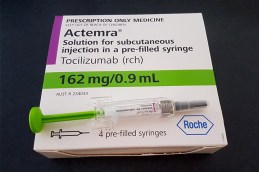
In other biosimilar news… On June 1,Biogen and Bio-Thera presented results from its phase 3 study of BAT1806, an investigational biosimilar referencing tocilizumab. The study tested the biosimilar against the reference product Actemra® (EU-licensed) in 621 patients with moderate-to-severe rheumatoid arthritis who had inadequate response to methotrexate therapy.

The partners announced that “the study met its primary endpoints, demonstrating equivalence to the reference medicine,” based on the primary endpoint of American College of Rheumatology 20% response (ACR20). If approved by the FDA, Biogen would market the agent throughout the world, excluding China and Taiwan. Globally, Roche earned roughly $340 million on Actemra in the first quarter of 2021 (or an estimated $1.4 billion extrapolated in annual sales) in the US, across indications.

Lupin’s Pegfilgrastim Biosimilar 351(k) Application Being Evaluated by FDA

Mumbai, India-based Lupin Ltd is attempting to enter the US biosimilar market for the first time with its version of pegfilgrastim. First approved and marketed in India in 2015, Lupin’s pegfilgrastim application was accepted on June 2 by the Food and Drug Administration.

The development of this agent included three double-blind, controlled trials, comprising more than 3,000 patients, in addition to the analytical, pharmacokinetic, and immunogenicity studies expected to support a 351(k) biosimilar application.

Based on the filing date, an FDA decision may be expected in Q2 2022. If approval is received, Lupin will be entering a crowded market as the fifth biosimilar pegfilgrastim. Currently, the pegfilgrastim category is dominated by the on-body injector Neulasta® product OnPro as well as the biosimilar brands Udenyca®, Fulphila®, Nyvepria®, and Ziextenzo®.

Lupin is not a stranger to the biosimilar area. Besides pegfilgrastim, the company launched its version of etanercept in the European Union as well as Japan and India, and it has a phase 3 study underway for a biosimilar of ranibizumab. To date, Lupin has not announced any marketing agreements with other manufacturers on the biosimilar front. The company has a strong US presence (based in Baltimore) for its generic business.

Are Biosimilars and the Oncology Care Model a Perfect Fit?

In shared-savings reimbursement models in healthcare, physicians have an incentive to use health resources more efficiently: They may receive bonuses based on the money that they save compared with a benchmark. The accountable care organization model, Medicare shared-savings model, and the oncology care model (OCM) are a few examples. These started as demonstration projects created by the Centers for Medicare and Medicaid Services in an attempt to give physicians skin in the game—to spur them to take a more active role in improving the efficiency of healthcare spending.

Logically, the use of biosimilars might be a natural prescribing tool to achieve these goals. If biosimilars were successful in contributing to savings bonuses, it would help solidify their uptake, the financial security of their manufacturers, and improve the profitability of the physician practice. After all, biosimilars cost less (at least on an average sales price [ASP] basis) than reference drugs and may allow more patients to access these valuable biologics.

The Contribution of Biosimilars to OCM Savings

More specifically, the agents approved for the direct or supportive treatment of cancer would seem to be a perfect fit for physician practices participating in the OCM. This is not necessarily the case, according to panelists at the Association for Accessible Medicine’s (AAM’s) Access 2021 annual meeting. Nick Adolph, Associate Principal, Market Access Strategy Consulting, IQVIA told virtual meeting attendees, “The OCM participants are more likely than not to utilize biosimilars. Oncology biosimilars have ASPs that are about 10% to 20% below that of the reference product,” but he also added, “reimbursement is variable. It could hinder or help. We don’t know the answer to this yet.”

John Brooks, JD,Partner, South Capitol Consultants, commented that part of the issue is that the OCM itself has not yet demonstrated big savings. On the other hand, “If we do see those results come through, then it can really support the idea of improved patient access to biosimilars,” he said.

The problem is that the savings generated by the OCM model have been underwhelming. The last three-year evaluation of the OCM model by Abt Associates revealed no material savings in spending, hospitalization, or emergency department visits for patients receiving active treatment of cancer.

Started in 2016, the OCM was slated to end its demonstration period this year. It will be replaced by the Oncology Care First (OCF) model, which moves away from fee-for-service payment to a bundled payment. This could potentially raise the stakes further in favor of biosimilar utilization.

Oncology biosimilars have been a market success story in the US. However, if the shared savings model itself fails to deliver promised benefits, could a heavier influx of biosimilar utilization turn the tide for the overall model? On a small scale, it seems possible, at least according to one study. This is probably not the case on a larger scale, with only the filgrastim/pegfilgrastim, bevacizumab, trastuzumab, and rituximab biosimilars available.

Disappointing Savings in the OCM Overall

As part of the Abt Associates’ evaluation of the OCM performance, the consultants analyzed the use of filgrastim and pegfilgrastim in patients with low or intermediate risk of febrile neutropenia during the course of their cancer treatment. They did not note any strong trends in the greater utilization of these agents during the evaluation period, although biosimilar pegfilgrastim was recently introduced. They saw mixed results, varying by risk of neutropenia and by specific cancer state. However, an important trend was evident: “During episodes when filgrastim (originator or biosimilar) was used, OCM episodes had faster adoption and greater use of biosimilar filgrastim than comparison episodes. Rates of biosimilar use were generally similar in OCM and comparison episodes [early on], but use increased more in OCM episodes during the [latter two evaluation periods]. OCM practices’ emphasis on biosimilar rather than originator filgrastim reflects a straightforward strategy of therapeutic substitution that reflects more value-based use of the granulocyte-colony stimulating factors.”

At AAM’s meeting, Mr. Adolph presented data showing physicians who were in buy-and-bill practices have demonstrated a greater preference for biosimilars compared with physicians who receive their patients’ medications through specialty pharmacy delivery. As the OCM model was still founded on a fee-for-service basis, this is not really surprising. That trend has become stronger among the 2019 biosimilar (oncology) launches, noted Mr. Adolph. For those receiving “white-bagged” pharmaceuticals, they have no financial incentive to choose a reference or biosimilar product (the administration fee is the same).

It may well be that the OCM did not demonstrate greater savings because the tools available to oncology practices were somewhat limited. Perhaps the savings goals and benchmarks were not well aligned. I’d like to think that given enough time to work their magic and with an extended study in the alternative payment model setting, oncology biosimilars can produce the kind of attitude or policy change that results in more visible savings. That may only be seen if the OCF model and its bundled reimbursement approach proceeds.

Biosimilar Education for Healthcare Professionals

Last week’s AAM Access 2021 virtual meeting generally danced to a positive beat on the progress of biosimilars today and in the near future. In her keynote address, Acting Food and Drug Administration Commission Janet Woodcock, MD, emphasized that the agency’s biosimilar development and consulting program has experienced increasing engagement. Dr. Woodcock stated, “As of May 1, 94 programs are enrolled in the biosimilar development program. CDER has received meeting requests to discuss the development of biosimilars for 43 different reference products.” This likely includes interest over many of the biologic products categorized as transitional until March 2020 (e.g., growth hormones, follitropins, and of course, the insulins). Forty-three reference products is a big number, however; this must include development programs for several new reference biologic targets.

Janet Woodcock, MD

Dr. Woodcock’s vision for a bright biosimilar future will require additional support on the part of the key stakeholders, including prescribers, payers, and other policy makers. Those observing the industry for some time realize that providers who have the most experience with biosimilars have offered the least resistance to the use of newly available biosimilars. Oncology has been a primary example. Since the initial availability of Zarxio® in 2015, this agent has become the dominant filgrastim product. Providers have presumably gained a high level of confidence in its safety and efficacy record (as well as the reliability of Sandoz’s supply chain), supporting its ongoing use. With this initial experience in the G-CSF category, oncologists quickly prescribed bevacizumab, trastuzumab, and rituximab as these agents were launched over the past 18 months. In the US, of course, infliximab biosimilar prescribing remains depressed, and gastroenterologists, in particular, may have less experience in prescribing (and therefore confidence in) the biosimilar versions of Remicade®.

For categories that may be new to biosimilars in upcoming years, better education of providers and healthcare professionals on biosimilars will play an important role. That starts today with the training students receive in medical, pharmacy, and nursing schools. The FDA recognized this, undertaking a project in 2019 to survey how biosimilar education is provided to students. Dr. Woodcock realized that this is no small question, as it underlies the importance of healthcare personnel’s comfort levels surrounding biosimilars.

Pharmacy Training in Biosimilars

In our own conversations with FDA, the American Association of Colleges of Pharmacy, the Academy of Managed Care Pharmacy, and with other leaders, it has been apparent that student education about biosimilars is very inconsistent. For example, in the college of pharmacy setting, we’ve received anecdotal reports of its discussion within the therapeutics curricula, the drug regulatory track, during pharmaceutical management training, or nothing much at all. In a couple of instances, biosimilars are addressed as part of satellite programs offered to students, which may be voluntary. These can provide a fuller introduction to the field, offering time for questions and answers, but is an hour or so adequate time to address such an important tool in controlling specialty pharmaceutical costs? In any case, it does have the effect of reaching a critical healthcare audience who will be responsible for educating patients and helping to make coverage policy decisions. At the very least, it does ensure that the terminology is not foreign to pharmacy school graduates.

One very difficult challenge is time. Within graduate programs, curricula are packed with traditional education on pharmacology and pharmacodynamics, education on disease and epidemiology, practice management, and the healthcare system in general. Finding space or an opportunity for new or developing educational topics can turn into a debate over priorities.

We have not had similar experiences on the medical school side of the fence. We know that experience breeds confidence in biosimilars. How will medical professionals consider the upcoming launch of the ranibizumab biosimilars for ophthalmologic indications? That’s new territory. Prescribers’ understanding of biosimilars’ role and the foundation for their FDA approval become even more critical to the successful launch and swift uptake of these agents.

Although Commissioner Woodcock mentioned the biosimilar education initiative in her keynote address, it is unclear if the project has gone beyond a basic survey of medical, pharmacy, and nursing school deans. Steps to provide a model core curriculum in biosimilars, or at least a consistent method for exploring the topic in graduate healthcare training, should now be a priority.